Dr. C. SOLDAN
Bonbonspezialist aus Leidenschaft
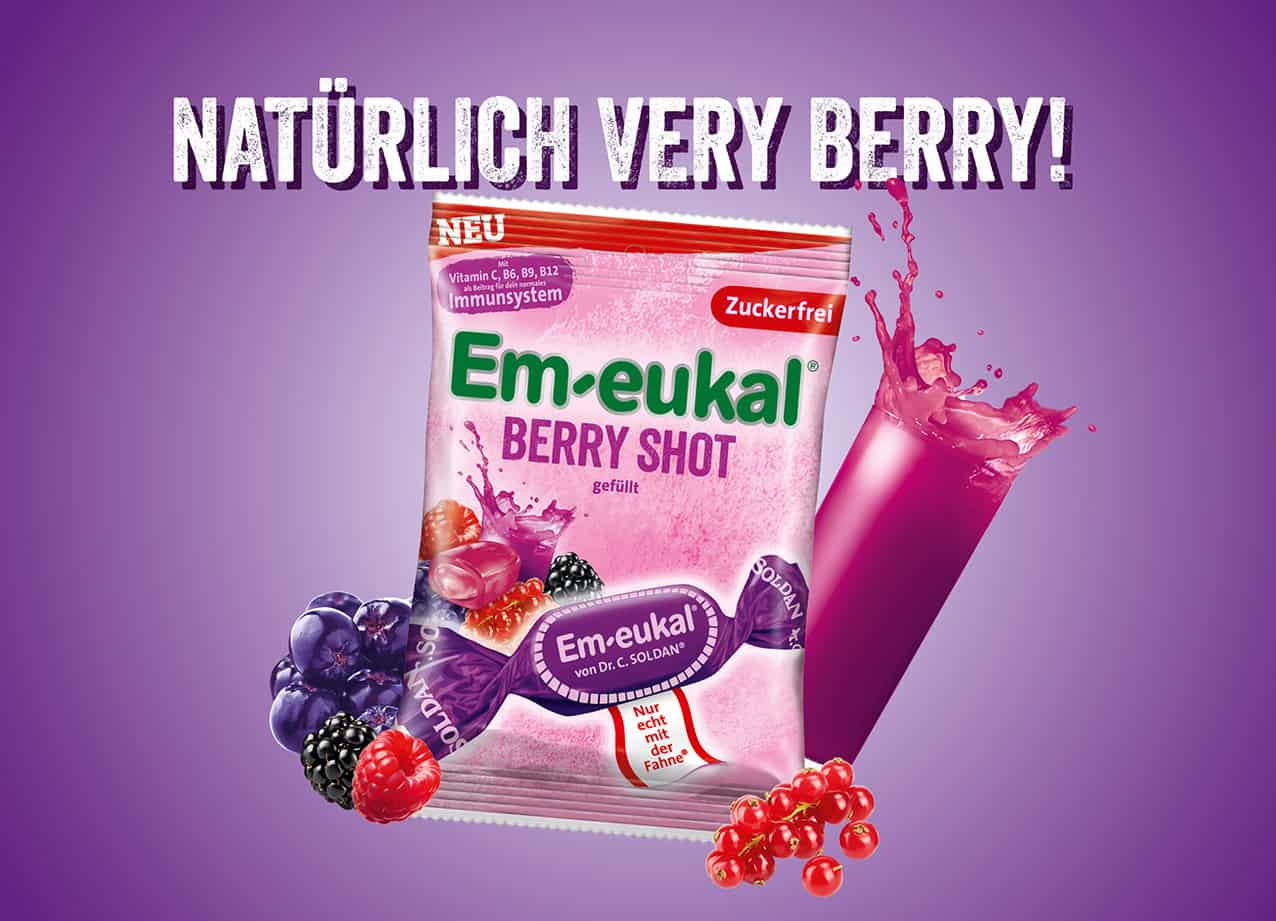
Em‑eukal – mit dem Plus für das Immunsystem*: Neue Sorte am Start!
Jetzt wird es very berry! Der neue Em‑eukal Berry Shot vereint intensiven Beerengeschmack mit zehn wertvollen Vitaminen – und das komplett zuckerfrei.
Schon probiert?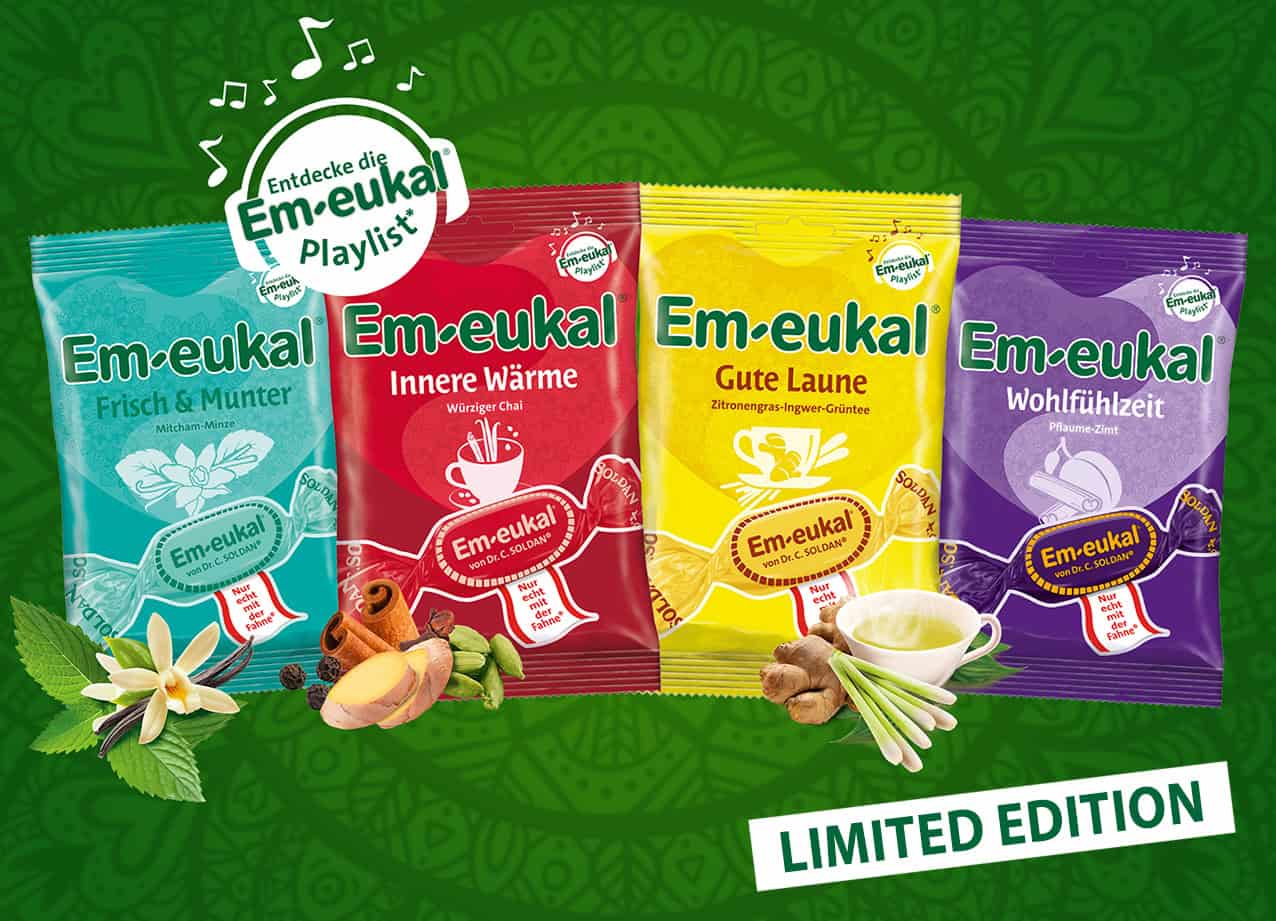
Unsere Em‑eukal Stimmungs-Edition ist da!
Von Em‑eukal gibt‘s ab Oktober 2025 passend zur kalten Jahreszeit wieder ein stimmungsvolles Genussquartett als Limited Edition.
Schon probiert?
Erneute Spende für Apotheke ohne Grenzen e.V.
Mehr dazu erfahren Sie hier
SWEETIE 2025
Auch 2025 hat die RUNDSCHAU für den Lebensmittelhandel die Top-Süßwaren des Jahres wieder mit dem Sweetie prämiert - und Em‑eukal ist zum 6.Mal mit dabei.
Neugierig geworden?
Perry Soldan erneut zu Gast im Podcast „Marken des Jahrhunderts“
Mehr erfahren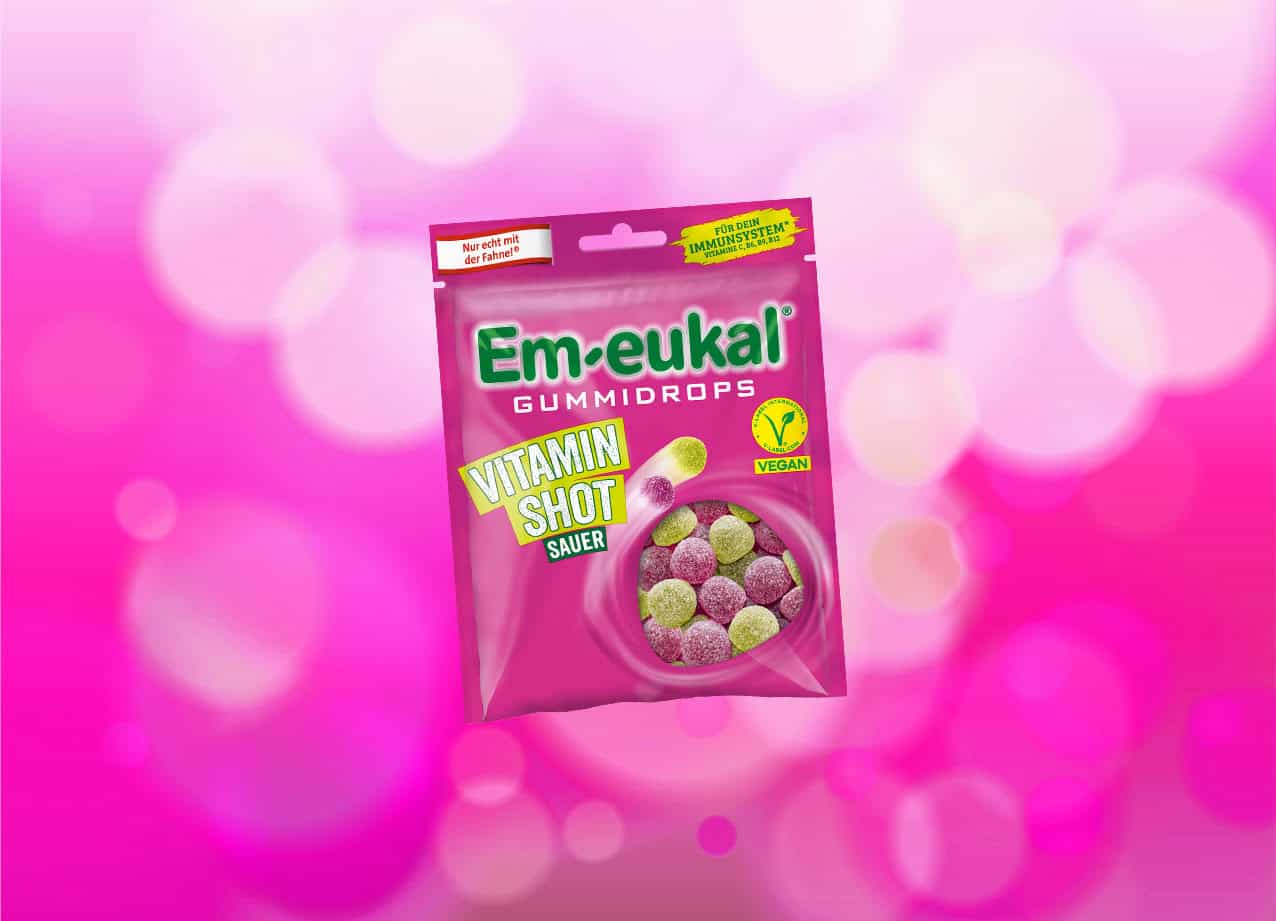
Em‑eukal - für das Immunsystem*: jetzt auch als Gummidrops am Start!
Zehn Vitamine, drei Sorten und vegan produziert – das sauer-fruchtige Kauvergnügen lädt ab sofort zum Genießen ein.
Schon probiert?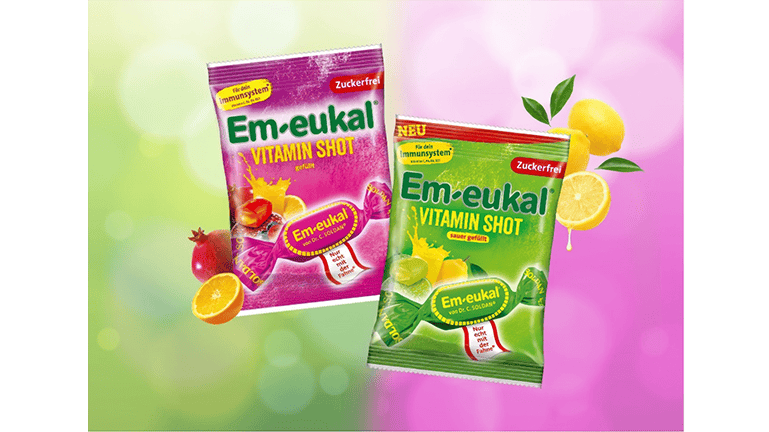
Em‑eukal - für das Immunsystem*: Neue Sorte am Start!
Der zuckerfreie Em‑eukal Vitamin Shot gefüllt hat ab sofort ein fruchtig-spritziges Pendant: Em‑eukal Vitamin Shot sauer gefüllt.
*Vitamine C, B6, B9 und B12 tragen zu einer normalen Funktion des Immunsystems bei.
Schon probiert?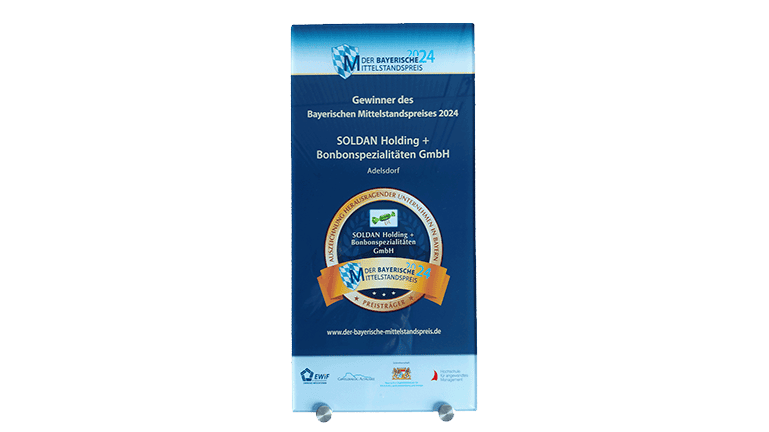
SOLDAN ist Preisträger des Bayerischen Mittelstandspreises 2024
Unser Familienunternehmen darf sich über eine weitere Würdigung seiner über 120-jährigen Erfolgsgeschichte freuen.
Mehr erfahren
Em‑eukal zum 8.Mal TOP MARKE
Auch 2024 hat die Lebensmittelzeitung wieder die 100 besten Marken in den wichtigsten Kategorien ausgezeichnet.
Und Em‑eukal ist mit dabei!
Neugierig geworden?
Perry Soldan zu Gast im Podcast „Marken des Jahrhunderts
Mehr erfahren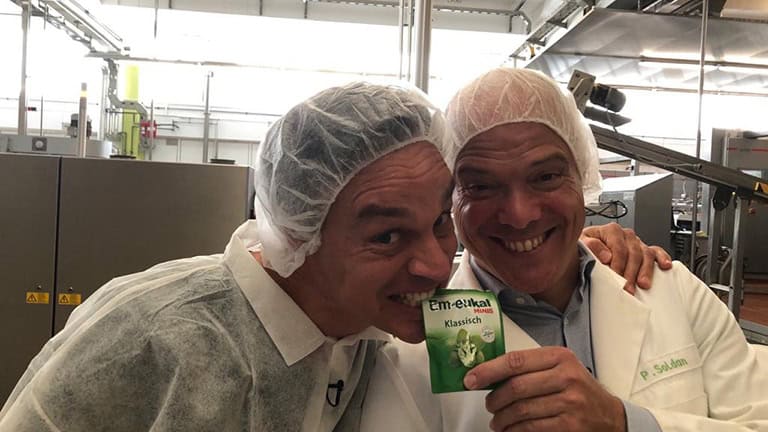
Galileo zu Gast bei Em‑eukal
Was steckt eigentlich in Hustenbonbons?
Dieser Frage ist Galileo nachgegangen - und hat sich mit unserem geschäftsführenden Gesellschafter Perry Soldan die Produktion unserer Em‑eukal Hustenbonbons angesehen.
Jetzt Video ansehenWir sind Bonbonspezialisten aus Leidenschaft!
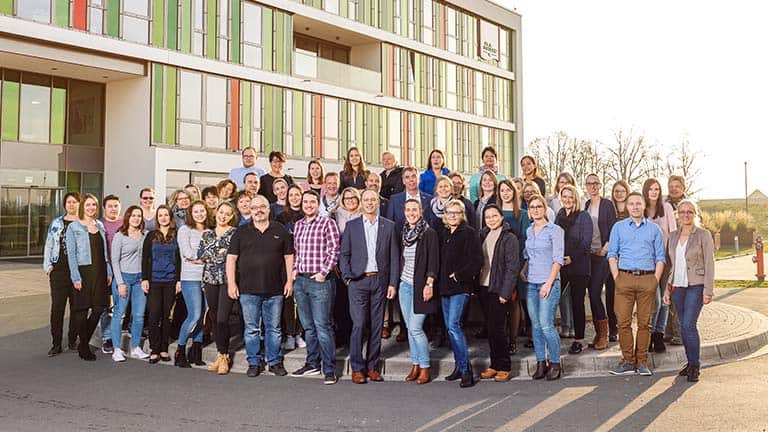
Premiumbonbons, die das Wohlbefinden fördern, entwickeln - diesen Grundsatz schreibt sich unser Familienunternehmen seit über 120 Jahren auf die "Fahne". Erfahren Sie mehr zu unserer Philosophie und lernen Sie uns kennen.
Mit dem Laden des Videos akzeptieren Sie die Datenschutzerklärung von YouTube.
Mehr erfahren
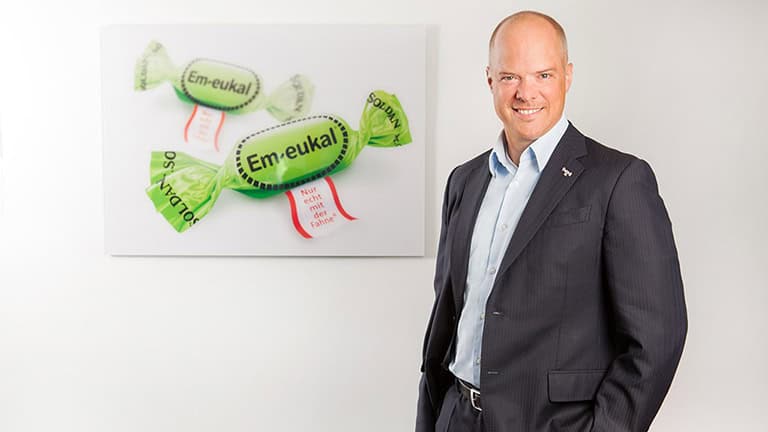
Wer oder was ist SOLDAN?
Bonbonkochen ist eine Kunst. Und unsere Leidenschaft seit 1899. Auch heute, in vierter Generation, setzen wir alles daran, mit unseren Premiumbonbons zu überzeugen.
Mehr über uns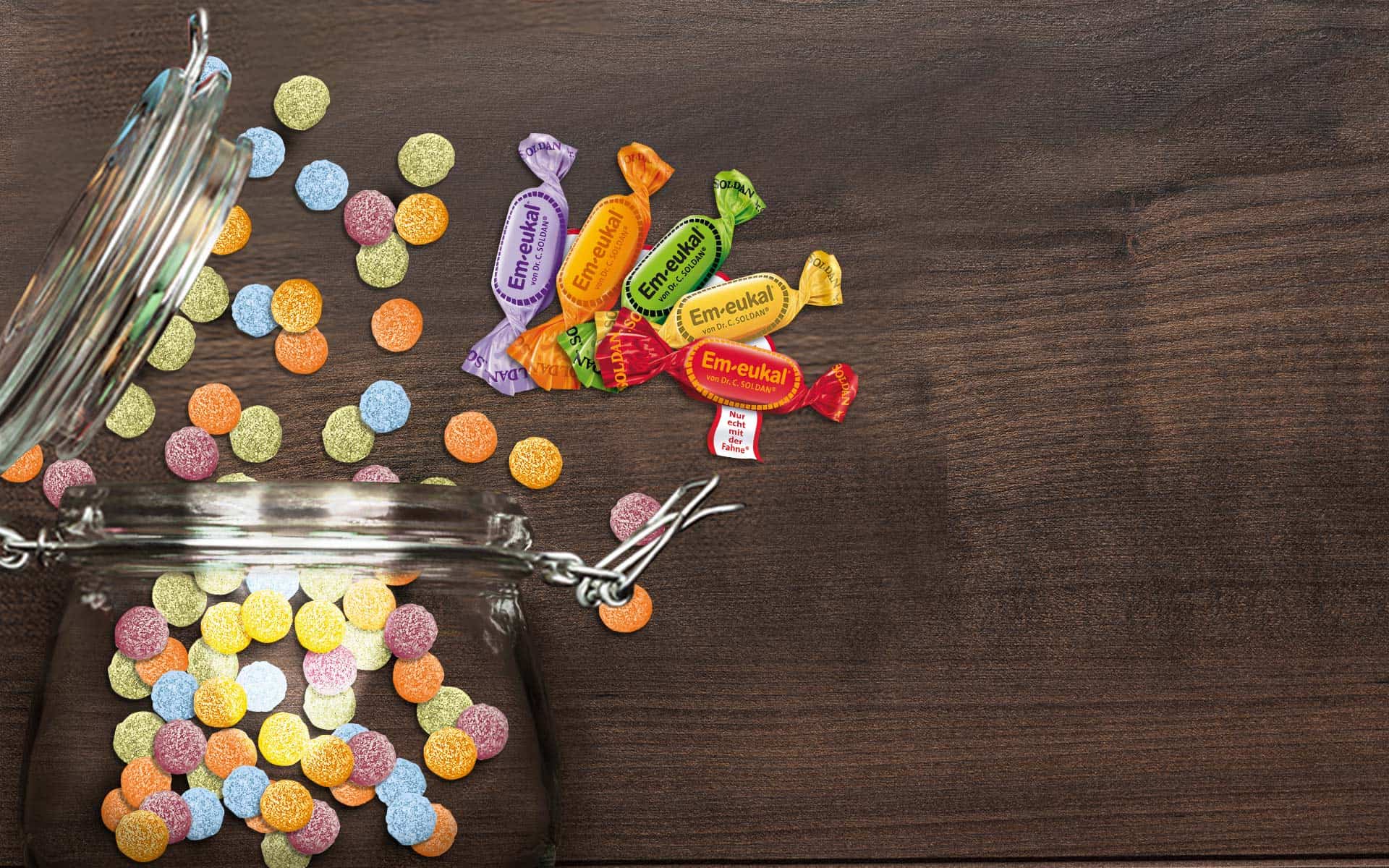
Lust auf den süßesten Job der Welt?
Dr. C. SOLDAN - Erfahrung trifft Leidenschaft. Arbeiten in einem Familienunternehmen, das bereits seit über 120 Jahren die süße Seite des Lebens herstellt.
Jetzt bewerben!Lecker wirkt immer!
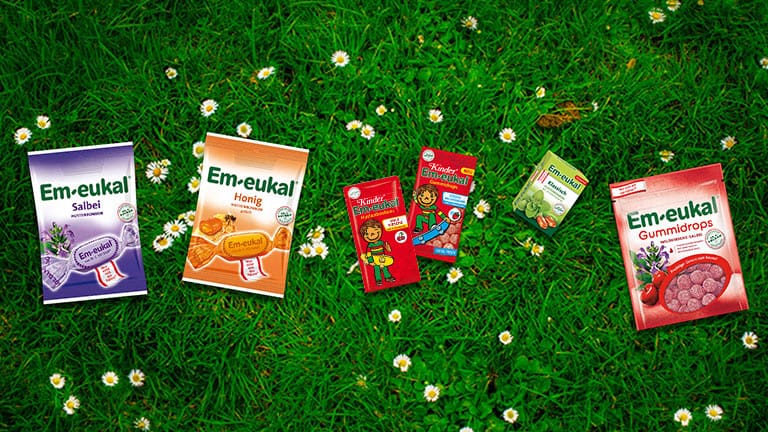
Die bunte und vielfältige Markenwelt wartet nur darauf von Ihnen erkundet zu werden!
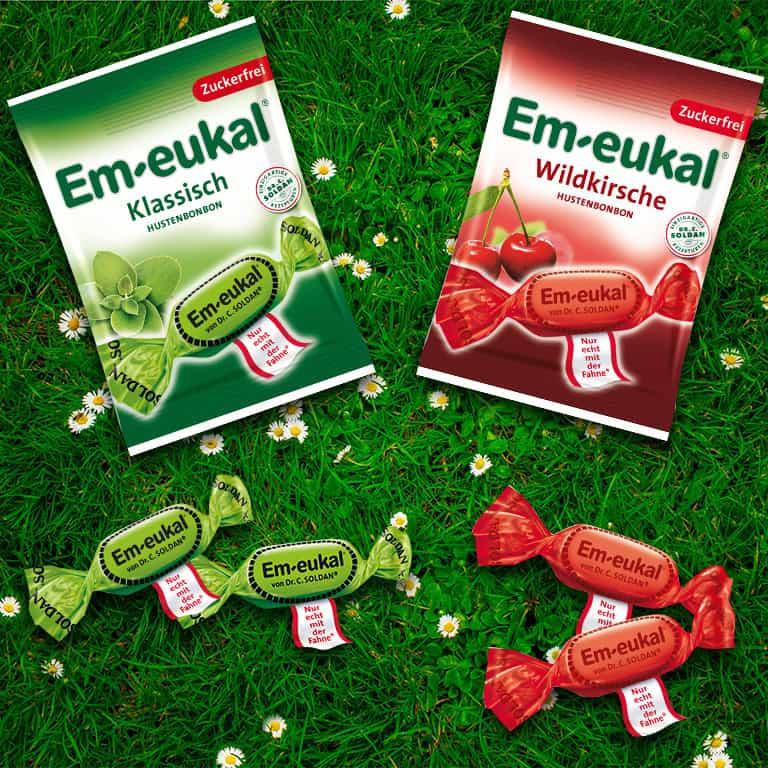
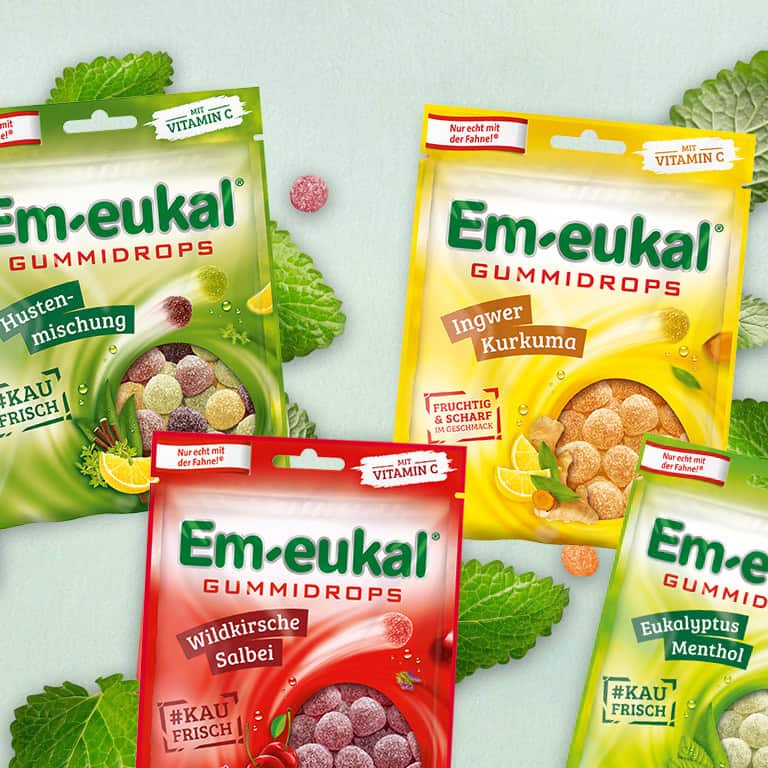
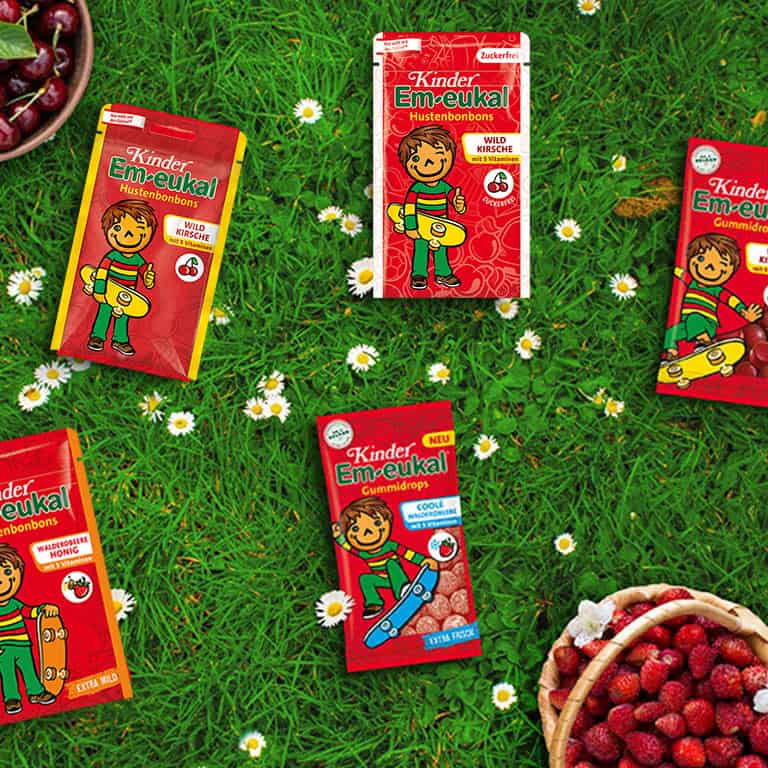



Sie interessieren sich auch für unsere aktuellen Neuigkeiten?
In unserer Rubrik "Innovationen und News" bieten wir regelmäßig interessante Einblicke in aktuelle Entwicklungen und Neuheiten.
Jetzt lesen
SOLDAN Erlebniswelt
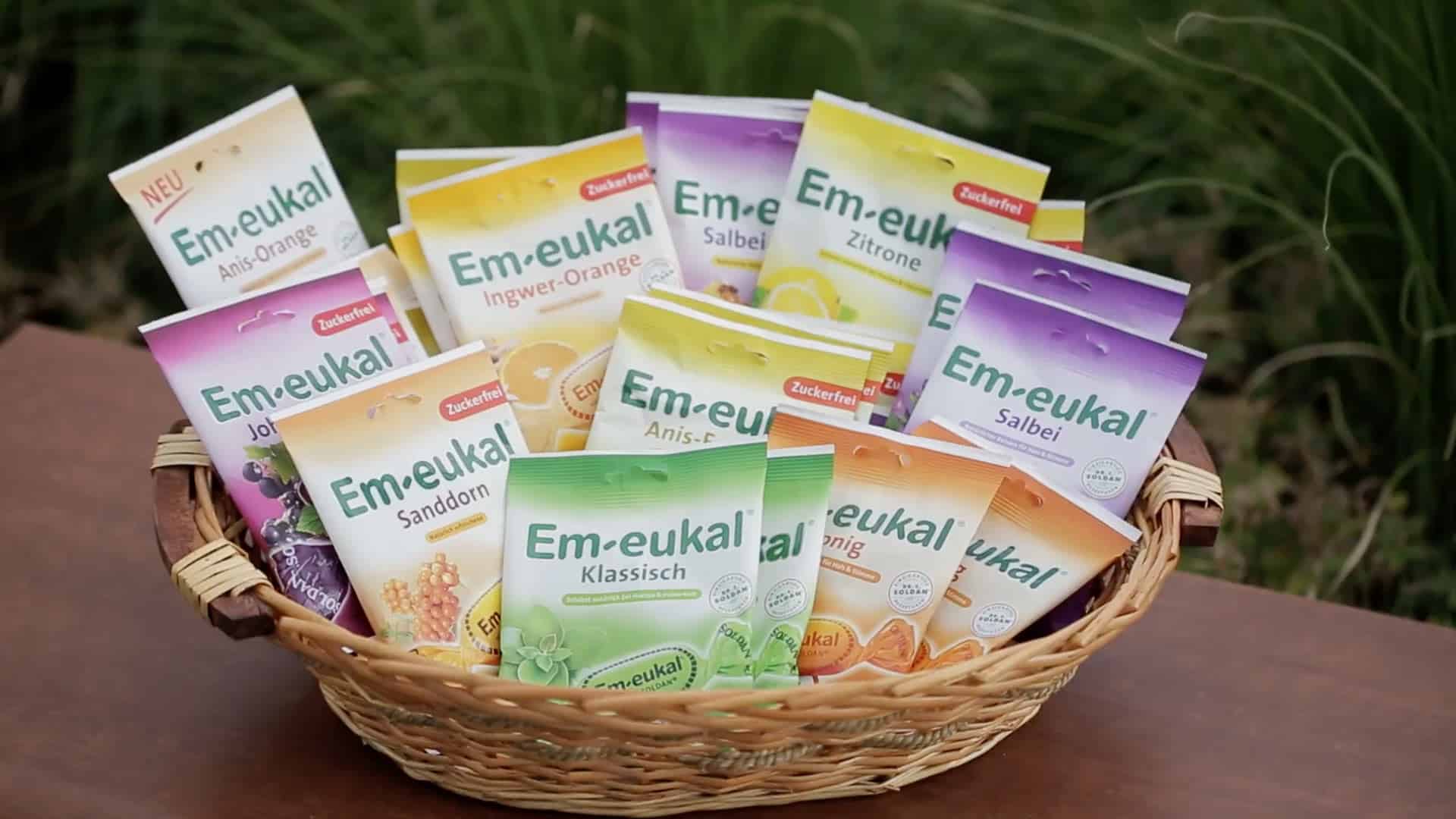
In Adelsdorf können Sie in unserer SOLDAN Erlebniswelt all unsere Produkte testen!
Mehr zum Werksverkauf
Kontakt
Sie haben Fragen, Anregungen oder Kritik? Wir haben immer ein offenes Ohr für Ihre Anliegen!
Zum Kontakt

Die ganze Welt von SOLDAN





* Die in allen Sorten der Em-eukal Immunsystem-Range enthaltenen Vitamine C, B6, B9 und B12 tragen zu einer normalen Funktion des Immunsystems bei.